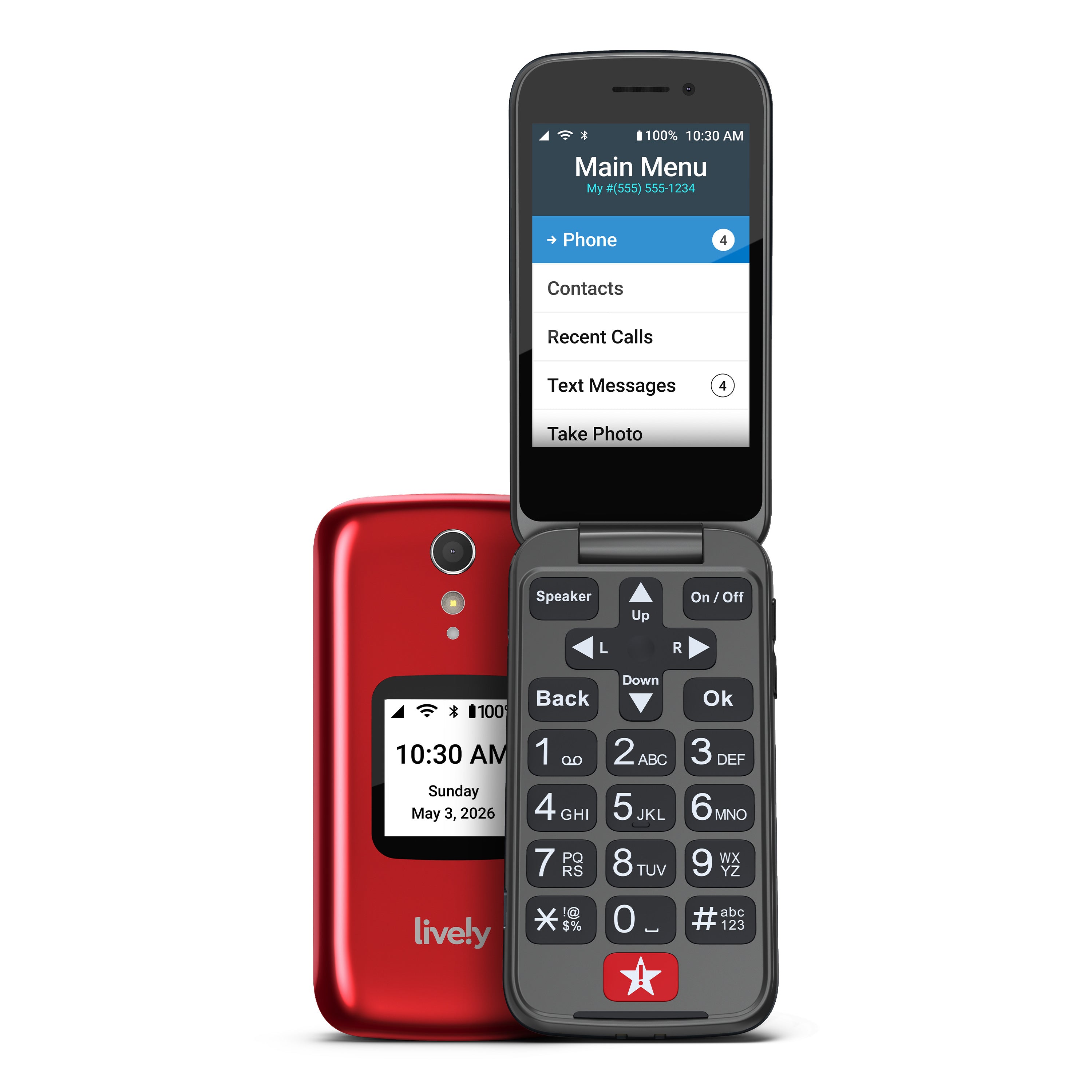
The most recommended senior phone — large buttons, loud speaker, and Urgent Response button.
Key features
Extra-large buttons with backlit display for low-vision users
Urgent Response button connects directly to a 24/7 care agent
Simplified menu with only features seniors actually use
Best for
Seniors 70+ who want a mobile phone for calls and texts without the confusion of a modern touchscreen — loud speaker, bright screen, simple menu. | A gift for a parent who misses calls, can't hear the speaker, or finds smartphone navigation overwhelming — works like a phone should, nothing more.
Worth knowing
Limited to calls and texts — no smartphone apps available
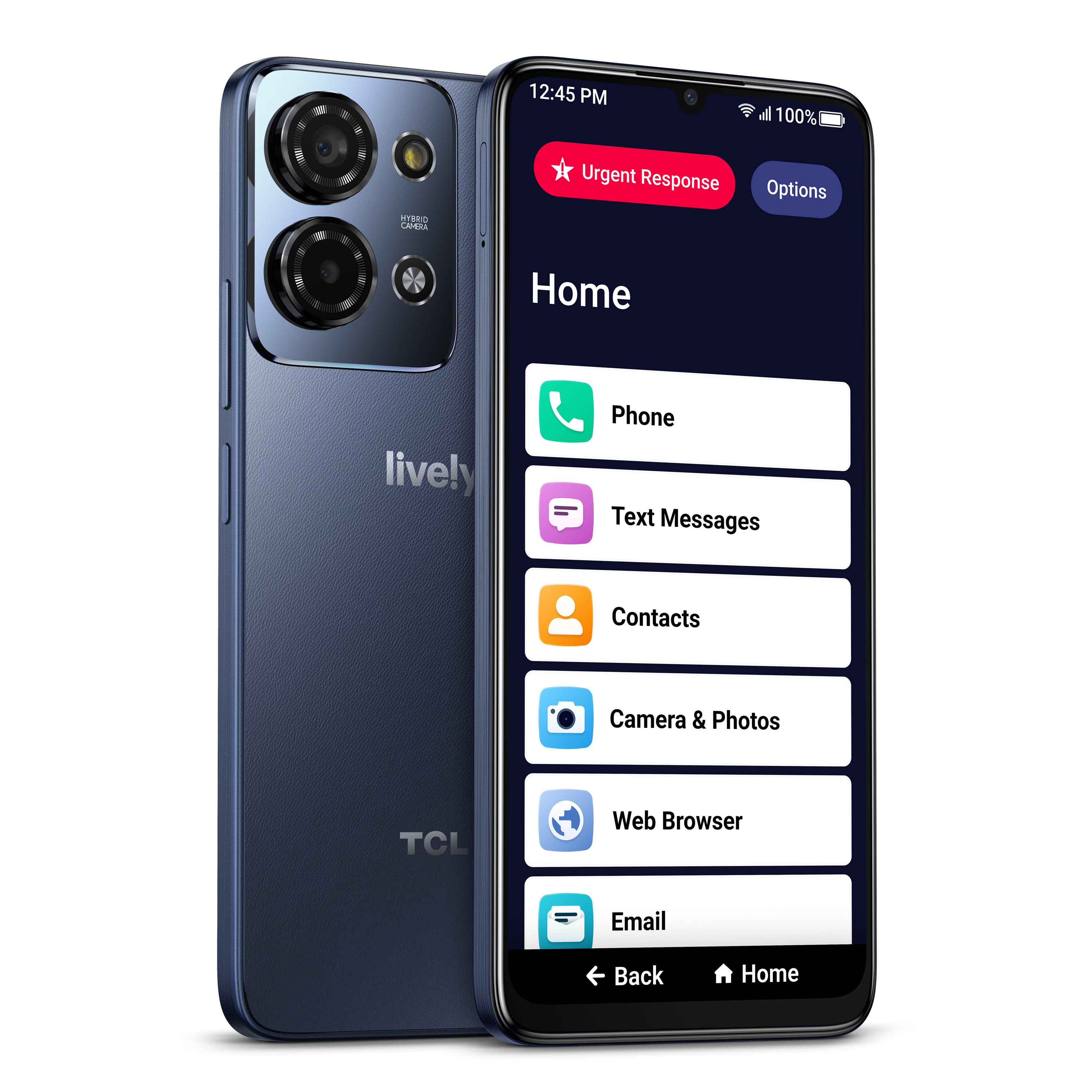
Senior Android smartphone with simplified home screen, large app tiles, and Lively health check-ins.
Key features
Simplified home screen with large app tiles by category
Built-in Lively app for health check-ins and care team alerts
Compatible with hearing aids (M3/T3 rated)
Best for
Seniors 65–80 who want a real smartphone — camera, apps, GPS — without the visual complexity of standard Android or iOS layouts. | A gift that closes the smartphone gap for a curious parent — all the features, simplified layout, and a dedicated senior support line included.
Worth knowing
Requires Lively service plan for Urgent Response feature
Top-rated amplified cordless phone with 40dB amplification, flashing ring alert, and large lit keypad.
Key features
40dB amplification and tone control for hearing loss
Flashing light ring alert for hearing-impaired users
Large backlit keypad with high contrast numbers
Best for
Seniors with hearing loss who prefer a traditional landline — amplified sound, large buttons, familiar form factor, no smartphone or app required. | A practical gift for a parent who struggles to hear calls on a mobile — works with the existing phone line, no new service or pairing needed.
Worth knowing
Requires a landline or VoIP service — not a cell phone
A large, bright display (6.5 inches or more), loud speaker with hearing aid compatibility, long battery life, durable build, and robust accessibility settings (text size, voice control, screen reader) are the priorities. Emergency SOS with fall detection and Medical ID on the lock screen add meaningful safety value for older adults.
If other family members use iPhones, FaceTime and iMessage integration make communication easier. If the senior is already familiar with Android, staying in the same ecosystem avoids relearning. Both platforms have excellent accessibility features. iPhone tends to be more consistent across versions; Android offers more hardware variety at different price points.
Yes. The Doro line, Jitterbug Smart3 (by Lively), and GrandPad are designed from the ground up for older users with large buttons, simplified interfaces, and built-in emergency response features. These suit seniors who find standard smartphones overwhelming, though they lack the full app ecosystems of iPhone and Android.
Mid-range iPhones and Android phones suitable for seniors cost $400–$800. Consumer Cellular, Lively, and GreatCall offer senior-focused plans with low-cost options and built-in safety features starting around $15–$25 per month. AARP members have access to plan discounts through several carriers.